
.svg)
Leigh Hunt famously said, “Colors are the smiles of nature.” For decades, the global diamond market has been anchored by the pursuit of the perfect white stone: flawless, brilliant, and devoid of color. It has long defined luxury, but in 2026, that definition of value is shifting thanks to anomalies in nature.
As lab-grown diamonds become increasingly ubiquitous, the once-prized nature of colorless stones has softened, leading to price stabilization across the category. While still beautiful, white diamonds are no longer the ultimate expression of rarity they once were.
In contrast, fancy colored natural diamonds exist in an entirely different realm. For every 10,000 carats of colorless diamonds mined, only one will exhibit a natural “Fancy” color. At the highest levels, Fancy Vivid saturation, that rarity intensifies to roughly one in 25,000. These are not just diamonds; they are geological aberrations.
Increasingly, collectors are viewing colored diamonds not simply as jewelry but as portable, finite, tangible, and globally recognized hard assets. In our current climate, where investors are seeking stability beyond traditional channels, natural fancy colors offer something few assets can: intrinsic rarity that cannot be replicated. That level of scarcity is redefining their role in the market.
But this is not a market for generalists. While any jeweler can sell a white diamond, accurately valuing a Fancy Vivid stone requires a nuanced understanding of the variables that can dramatically impact price: color, origin, saturation, distribution, and demand.
Windsor Jewelers, Inc.’s New York City heritage places it firmly within this rarefied space. With deep roots in the diamond trade and access to the world’s most exceptional stones, Windsor offers expertise and precision in a category where rarity defines value.
The Grading Hierarchy: Decoding the "Fancy" Scale
In many ways, the valuation of colored diamonds turns the traditional diamond scale on its head. Where a “D” grade represents the pinnacle of perfection in a colorless stone, value in colored diamonds increases with the presence and power of color. The more vivid and saturated the hue, the more exceptional the stone. Rather than being judged on the absence of color, these diamonds are graded on three critical elements: hue, tone, and intensity. It is this interplay that determines not just their beauty but also their rarity and, ultimately, their value.
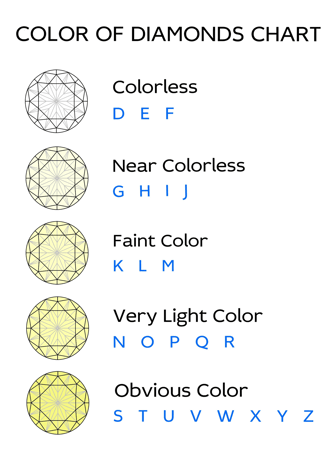
White Diamonds: Value is driven by the absence of color (the closer to a "D" grade, the higher the price).
Colored Diamonds: Value is driven by the presence and purity of color. The more saturated the hue, the more exponential the price leap.
The global benchmark for colored diamond grading is the Gemological Institute of America (GIA). As the industry’s most trusted authority, GIA established the standardized system for evaluating colored diamonds by hue, tone, and intensity. Its classifications, from Fancy Light to Fancy Vivid, are the foundation upon which market value is determined worldwide.
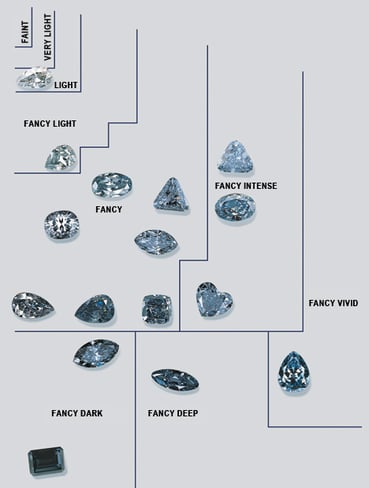
The GIA spectrum:
-
Faint / Very Light: These stones show a "whisper" of color. While beautiful and often used in fine jewelry, they are rarely considered "investment-grade" in the 2026 market.
- Fancy Light: The first tier where color is clearly "face-up." These are the most common entry points for collectors.
- Fancy: A clear, recognizable color. This is the baseline for high-end colored diamonds.
- Fancy Intense: A deep, rich saturation. In 2026, "Fancy Intense" is the minimum grade typically sought by serious investors looking for long-term appreciation.
- Fancy Vivid: The pinnacle. These stones possess the perfect balance of tone and saturation and are the standard by which the world’s most exceptional stones are measured. These diamonds display an intensity so pure and concentrated that it transforms them from rare to truly extraordinary, making them investment grade. The market reflects this distinction decisively: a Fancy Vivid stone can command prices ten times higher (or more) than a comparable diamond graded as Fancy Light. In this category, even subtle differences in saturation are not incremental; they are exponential.
- Fancy Deep / Fancy Dark: These stones have high saturation but a darker tone. They appeal to collectors who prefer a "moody" or "velvety" look, such as in Deep Blue or Dark Orange stones.
Beyond color alone, the value of a colored diamond is deeply tied to where it comes from and the story it carries. Certain mines have achieved near-mythic status in the trade. The Argyle Mine, now closed, was the world’s most important source of pink and red diamonds, producing over 90 percent of global supply at its peak, with stones often accompanied by highly coveted origin documentation. Similarly, historic sources like the Golconda mines are synonymous with legendary diamonds of exceptional purity, while Australia’s Ellendale mine became renowned for its vivid yellow diamonds. Notably, Tiffany & Co. held exclusive rights to Ellendale’s most exceptional yellow diamond production from the 2000s until the mine’s closure in 2015, further elevating the desirability of those stones.
Today, provenance is more important than ever. Many mines and manufacturers issue certificates of origin, offering transparency around a diamond’s geographic source and journey to market. Industry leaders like De Beers, the world’s largest distributor of rough diamonds with operations across Africa and Canada, have implemented their own proprietary certification and tracking systems to reinforce authenticity and ethical sourcing. In parallel, luxury houses such as Tiffany & Co. and Harry Winston provide branded documentation that further substantiates origin and quality, adding another layer of confidence for collectors.
Underpinning all of this is the Kimberley Process Certification Scheme (KPCS), an international framework established to prevent the trade of conflict diamonds. While originally focused on rough stones, it has introduced a baseline level of traceability and accountability that continues to shape how diamonds, including rare colored stones, are sourced and sold today. For collectors and connoisseurs alike, a diamond’s provenance is no longer a footnote. It is an essential part of its identity, rarity, and enduring value.
The Rainbow of Rarity: A Color-by-Color Breakdown
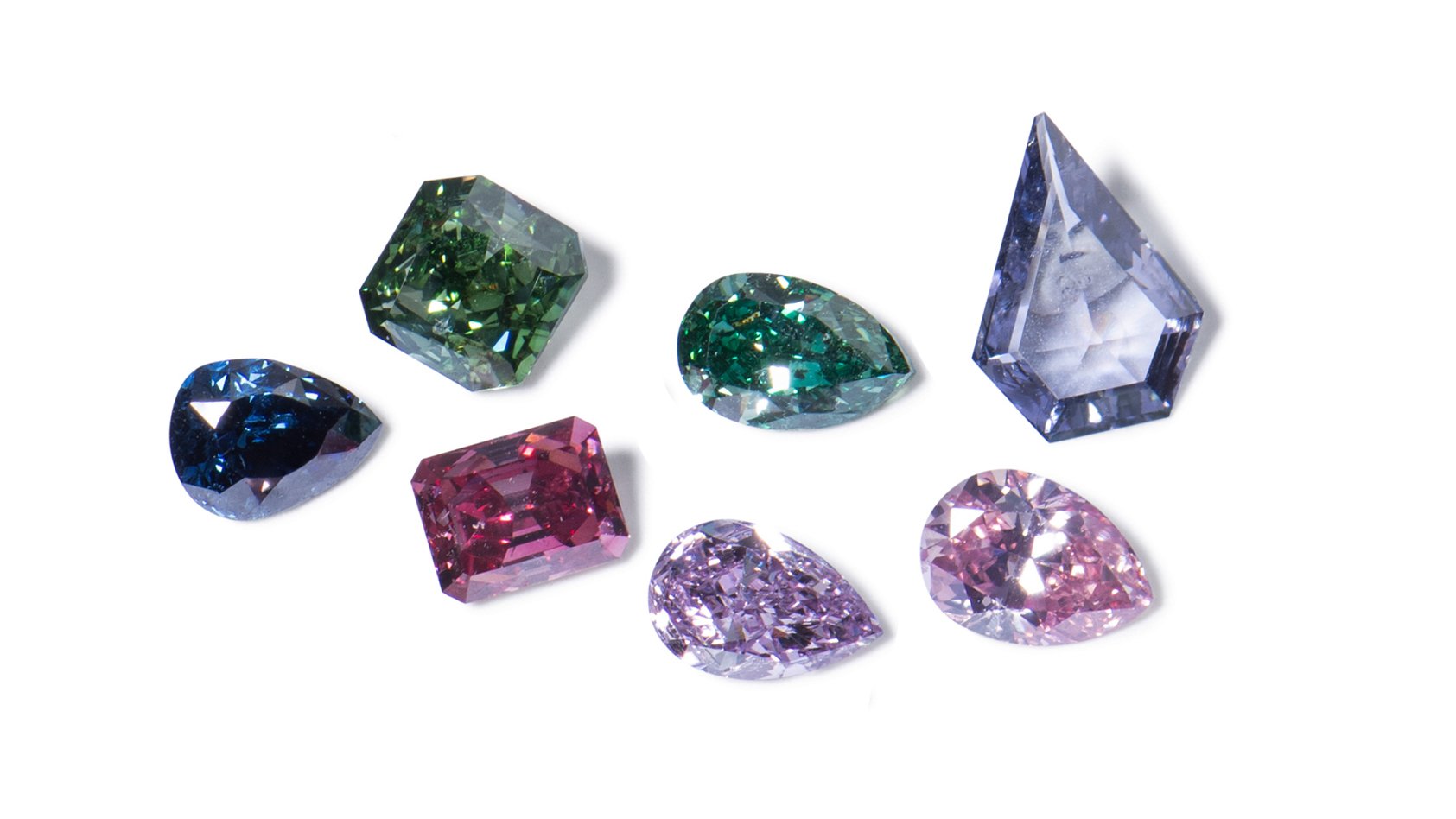
Fancy colored diamonds follow a clear hierarchy of rarity, rather than existing on a simple spectrum like white diamonds. Each color forms under specific geological conditions, and each holds a distinct position in today’s market. From near-mythical reds to more accessible yellows, these stones have evolved from decorative pieces into recognized hard assets.
Red diamonds are the Holy Grail of fancy colored diamonds, and they sit at the very top of the hierarchy. Unlike other colored diamonds, they derive their color from a rare structural distortion rather than trace elements or impurities. Extreme pressure during formation warps the carbon lattice, causing the diamond to absorb green light and appear red. Despite their color, they remain chemically pure carbon. Fewer than 30 true red diamonds exist worldwide, and only 0.04% of fancy color diamonds submitted to the GIA receive a Fancy Red grade. In 2026, collectors pursue them as the ultimate hard asset, with prices ranging from $1 million to over $2.5 million per carat. Windsor Jewelers’ own 3-carat cushion-cut red diamond exemplifies this level of rarity.
Purple diamonds follow as one of the most elusive categories in the market. Their color likely results from a combination of crystal lattice distortion and trace elements such as hydrogen or boron, though their exact origin remains less clearly defined. Retail markets rarely see these stones, as they tend to remain within elite estate collections. Pure purple diamonds, particularly in larger sizes, are scarcer than pink, blue, and green diamonds. The 7.34-carat Fancy Vivid Purple “Royal Purple Heart Diamond,” cut by Julius Klein Diamonds from Siberian rough, stands as the largest known example recognized by the GIA.
Green diamonds develop their color through natural irradiation within the earth. Exposure to alpha, beta, or gamma rays creates structural vacancies in the crystal lattice, which produces the green hue. Fewer than 0.1% of all mined diamonds qualify as Fancy Green. The Ocean Dream, which sold for $17.3 million at Christie's just this month, more than doubled its 2014 selling price of $8.5 million. Called "the world's rarest," the blue-green gem was featured among rare colored diamonds at the Smithsonian Splendour of Diamonds Exhibition in 2003. The historic 41 carat, Type IIa Dresden Green Diamond dates back to 1722 and is the world’s most famous green diamond, having survived war, exile, and a famed jewelry heist. Modern moments, such as Ben Affleck’s second engagement ring to Jennifer Lopez, have renewed broader awareness of green diamonds and colored diamonds to the masses.
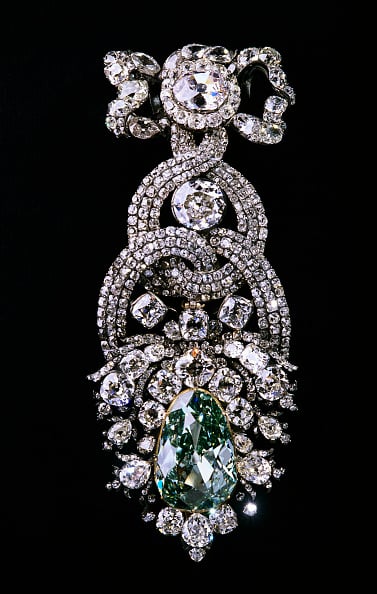
The Dresden Green Diamond
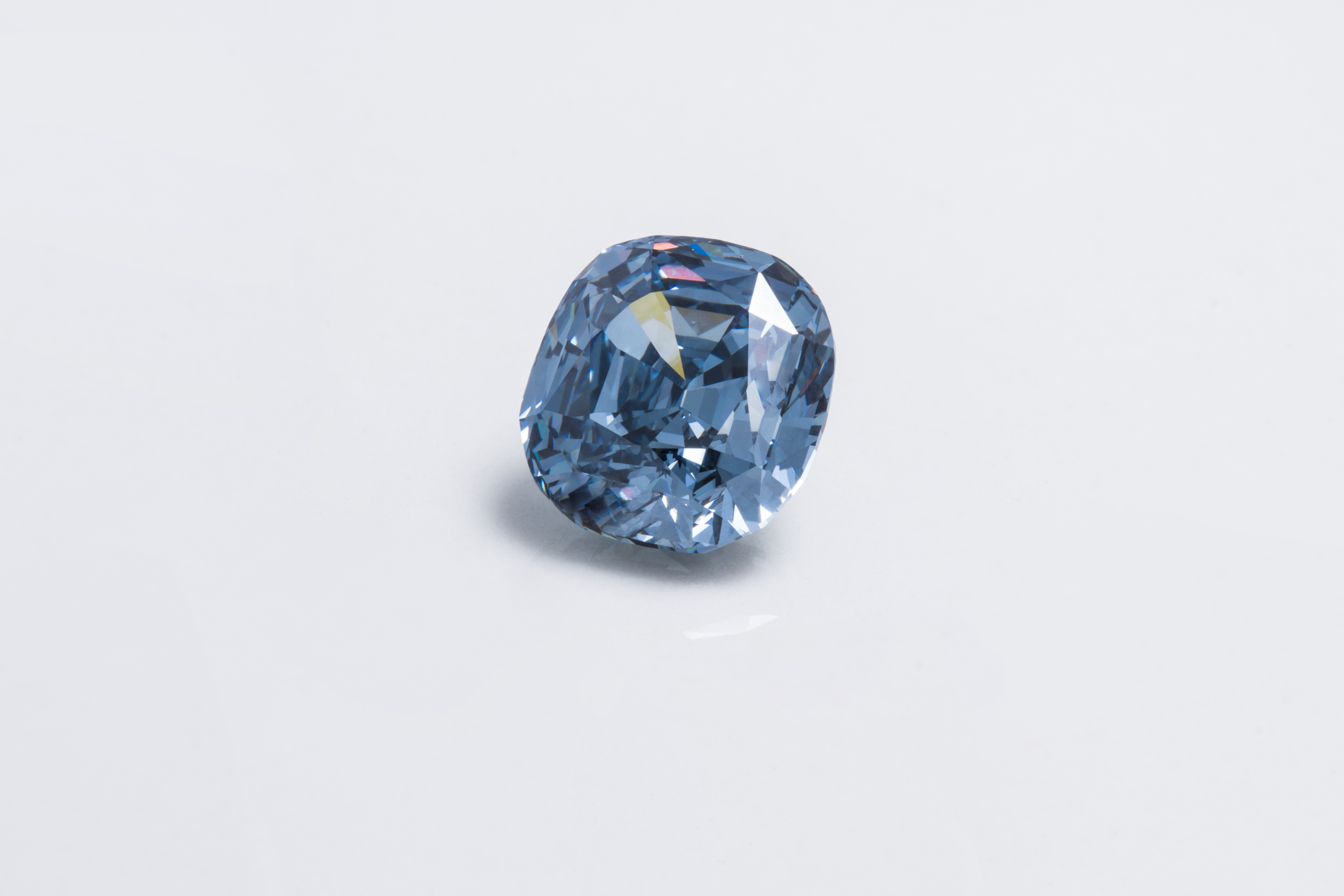
Blue diamonds remain among the most recognizable and historically significant colored diamonds. The presence of boron allows the stone to absorb red light and emit blue, creating its signature color. India was once the primary source, while more recent discoveries have come from the Cullinan Mine in South Africa. Iconic stones such as Windsor’s own Shirley Temple “Blue Bird” Diamond and The Hope Diamond continue to define this category as both culturally important and investment-grade.
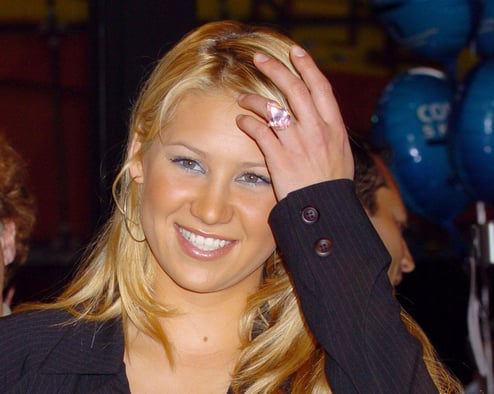
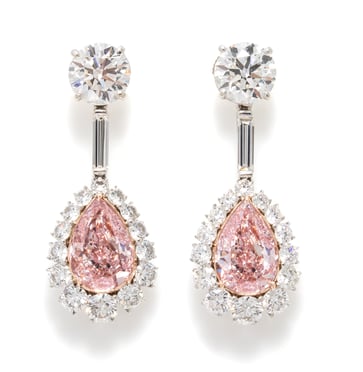
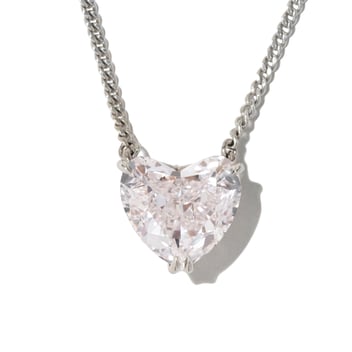
Pink diamonds have undergone one of the most dramatic market shifts in recent history. Like red and purple diamonds, they form through crystal lattice distortion. For decades, the Argyle Mine in Western Australia produced more than 90% of the world’s pink diamonds. Its closure in 2020 permanently constrained supply. No comparable source has emerged, and that absence has positioned Argyle pinks as the gold standard for 2026 estate acquisitions. High-profile examples, such as the CTF Pink Star Diamond, with celebrity engagement rings like Jennifer Lopez’s first engagement to Ben Affleck, Ana Kournikova’s to Enrique Englesias, and one of Victoria Beckham’s fifteen rings, reinforcing their continued demand.
Orange diamonds combine visual intensity with extreme rarity. Nitrogen typically drives their color, sometimes alongside the same lattice distortion seen in red and pink diamonds. Fewer than 0.05% of natural diamonds display even a hint of orange. Pure orange stones without brown modifiers rank among the rarest of all colored diamonds. The most desirable examples carry a Fancy Vivid Orange grade, where the color appears bold and unmistakable. The 5.54-carat Pumpkin Diamond, cut by William Goldberg and later owned by Harry Winston, gained international attention when Halle Berry wore it at the Academy Awards.
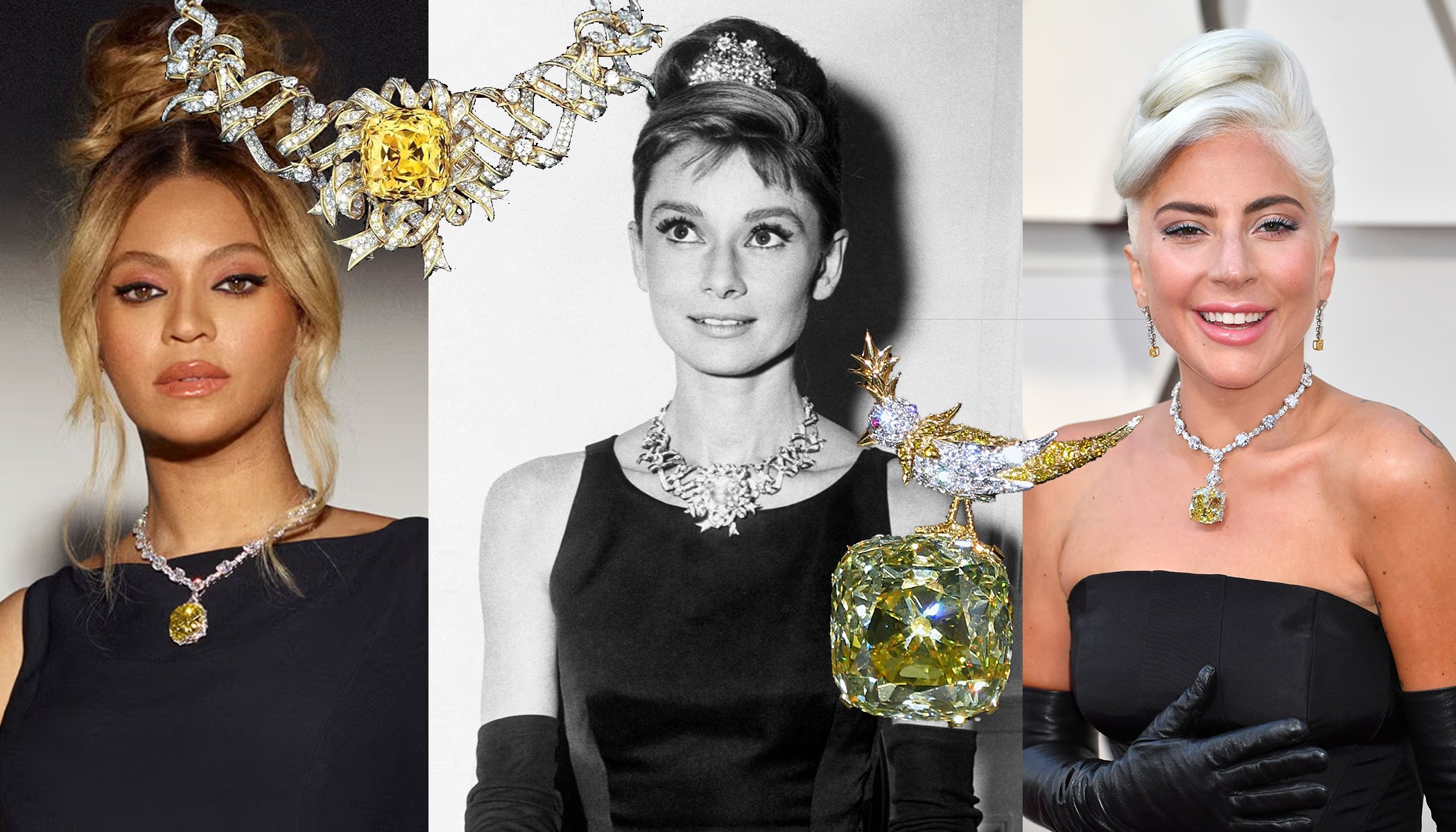
Yellow diamonds offer the most accessible entry point into the colored diamond market. Nitrogen atoms absorb blue light and emit yellow, producing their bright, familiar tone. Often referred to as canary diamonds, they remain consistently popular in both retail and estate markets. The Tiffany Diamond remains the benchmark, representing both heritage and enduring desirability.
Brown diamonds have experienced one of the most significant shifts in perception in the industry. Their color results from a combination of crystal lattice distortion and nitrogen. For years, the market undervalued them. Branding efforts in the 1980s repositioned these stones as Champagne, Cognac, and Chocolate diamonds, which increased their appeal. In 2026, high-carat, deeply saturated brown diamonds have re-emerged as “Desert Diamonds,” a term driven by De Beers to reflect their warm, modern sophistication.
Together, these colors define a true hierarchy of rarity. Each diamond tells a distinct geological story and occupies a specific place in the global market. Value does not come from color alone; it is expressed by the same elements that make diamonds special in their own right: nuance, origin, and scarcity, and from knowing how to recognize each of them.
Why Expertise Matters
Colored diamonds are among the most complex assets in the jewelry market, and also the easiest to misjudge without true expertise. Unlike colorless stones, where value is relatively standardized, colored diamonds exist on a spectrum where nuance defines everything.
A single shift in “secondary hue” can dramatically alter value. A purplish-pink, for example, may command a significantly different price than an orangey-pink of similar size and clarity. These distinctions are market drivers rather than cosmetic factors. Most colored diamonds are not pure in color, but rather a blend of primary and secondary tones, each combination carrying its own level of desirability and rarity. In turn, valuation is a specialized art and discipline.
The Insider Advantage
A valuation by Windsor Jewelers, Inc. goes far beyond reading a report. While certification from the Gemological Institute of America (GIA) provides the foundation, it does not tell the full story. True assessment requires understanding the life of the color: how it presents in different lighting, how the saturation moves across the stone, and how current market demand responds to those subtleties.
An auction house may place a stone in a catalog for months, waiting for the right buyer at the right moment. Windsor operates differently. By working within the active market, our experts provide immediate, informed valuations based on real-time 2026 demand.
Discretion Over Publicity
Privacy is the priority of many owners of rare colored diamonds. Public auctions, while visible, come with extended timelines, unpredictable outcomes, and significant seller fees.
Windsor Jewelers, Inc.’s alternative is a discreet, highly personalized process designed for clients who value confidentiality as much as they value accuracy. Transactions are handled with precision and respect, allowing clients to explore the full potential of their assets without the spectacle of a public auction house.
Timing the 2026 Diamond Market
Colored diamonds exist at the intersection of geology and art. They were formed by rare natural conditions, yet valued for their visual impact and individuality. Whether it is a vivid yellow, a saturated pink, or an exceptionally rare blue, their worth is defined not only by size, but by nuance.
In 2026, as collectors continue to seek stability through tangible, finite assets, natural fancy colored diamonds stand apart. They are rarities, and each one carries a combination of characteristics that cannot be duplicated.
For those looking to evaluate, acquire, or refine a collection, Windsor Jewelers, Inc. offers a level of insight shaped by decades of experience at the highest levels of the market.
Contact Windsor Jewelers, Inc. for a confidential consultation and discover the true market potential of your collection today.